
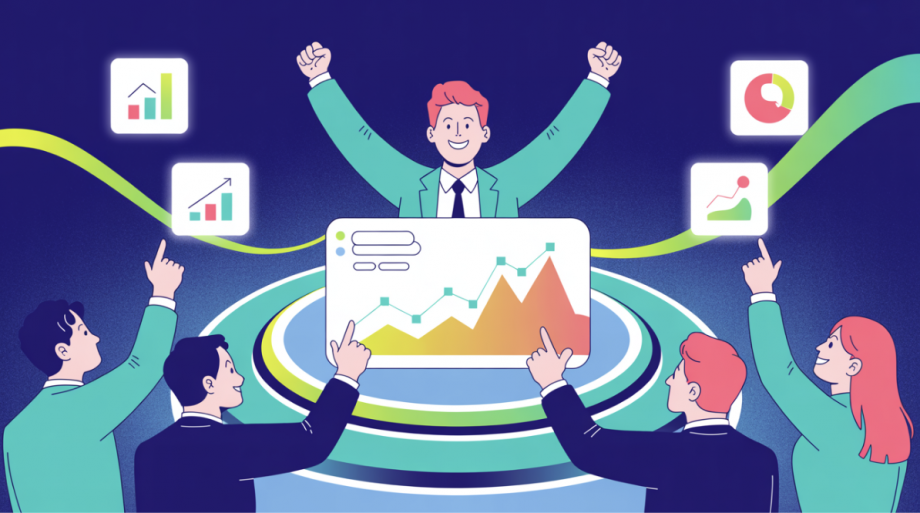
Most of us in digital marketing did not dream of spending our days setting up UTM links, copying reports into spreadsheets, or herding content approvals like a caffeinated border collie. We're here for the big ideas—the killer campaigns, the creative moves, the moments when you hit “publish” and, just for a second, feel like Don Draper with WiFi.
But reality? It's admin. It's data. It's another week with five new channels and twice as many analytics dashboards. Enter AI. Not as your replacement (stop sweating), but as the extra brain you always wanted—minus the HR paperwork.
So if you're wondering how to actually use AI in digital marketing—without just copy-pasting “write me a blog post” and hoping for the best—here's the down-to-earth, zero-fluff, real-world guide. Get ready to level up.
The Era of "Manual" Is Dead. Long Live the Marketer!
Not long ago, digital marketing felt like alchemy. A pinch of SEO, a dash of influencer magic, and a healthy dose of “let's see what happens.” You could get away with wild guesses. Not anymore.
The pace is insane. New social networks, changing algorithms, and a content arms race that would make even the most organized team cry into their Asana boards. Marketers everywhere are searching for a new edge—and AI is sitting there, sipping its double espresso, wondering why you're still doing things the hard way.
AI isn't some all-knowing overlord plotting to take your job. It's a set of tools. The good news? These tools are getting smarter and easier to use every single week. The only real mistake left is ignoring them.
1. Content Creation: Your In-House Writer With Zero Ego
Let's be honest. Content is king, queen, and the entire parliament. But churning out good content at scale? That's a slog.
How AI changes the game:
AI writing assistants—yes, the technology powering this article—can draft blog posts, social media captions, product descriptions, and even whitepapers. They never whine about word counts, never ask for more coffee, and don't complain about SEO keywords. Better yet, they're getting more nuanced by the day.
Real-World Moves:
- Draft first, edit later: Have AI crank out your first draft. You swoop in, add insights, banish bland sentences, and claim the glory.
- Headline brainstorms: Need 25 fresh headline ideas for an A/B test? That's a two-minute job now.
- Repurposing galore: Turn webinars into articles, articles into LinkedIn posts, posts into tweets—without re-inventing the wheel every time. And if your content needs a quick visual upgrade, tools like Kittl make it easy to create stunning visuals that match your messaging without starting from scratch.
- Translating at scale: Launching globally? Use AI for instant translations, then have a native speaker check for awkwardness.
Pro tip: AI writes fast, but it's only as good as the human shaping the brief and editing the output. Think of it as your creative junior, not your creative director.
2. Personalization: Finally Not Creepy, Actually Useful
We all know the creepy side of marketing: “Hey [NAME], we noticed you left a blue sock in your cart last Tuesday.” But real personalization—the kind that actually feels helpful—has always been more art than science.
How AI makes it real:
AI can crunch piles of behavioral data and instantly serve up hyper-relevant content, products, or offers. Not just “Hello, first name”—but actual, meaningful recommendations.
Real-World Moves:
- Dynamic content blocks: Show different website banners, offers, or articles based on real-time user data. Netflix-level customization, minus the Hollywood budget.
- Smart email segmentation: Gone are the days of sending everyone the same generic newsletter. Use AI to predict who's ready to buy, who needs a nudge,which emails may need an unsubscribe from email option and who's about to ghost you forever.
- Chatbots that don't suck: Modern AI bots do more than just answer FAQs. They can walk leads through your funnel, recommend products, or book appointments—24/7, no bathroom breaks required.
Pro tip: The magic is in the data. Feed your AI with clean, meaningful info (not just vanity metrics), and watch the relevance of your campaigns skyrocket.
3. Analytics and Reporting: Numbers, Minus the Numbness
No offense to spreadsheet lovers, but most marketers did not go into the field to spend three hours a week cleaning CSVs. Yet the numbers matter—otherwise, you're just making expensive noise.
Where AI steps in:
AI-powered analytics tools can do what would take a junior analyst days—in seconds. They spot trends, find anomalies, predict outcomes, and even generate smart, readable summaries.
Real-World Moves:
- Automated dashboards: Get instant insights into what's working, what's tanking, and what's looking weird—without setting up a hundred manual reports.
- Predictive analytics: Want to know which leads are most likely to close, or which content is about to go viral? AI can give you a pretty good guess, using real data, not gut feelings.
- Natural language queries: “Show me all blog posts from last quarter that drove more than 100 leads.” Your dashboard understands you, and spits out the answer.
Pro tip: Don't just look at what happened. Use AI's predictive features to spot what's about to happen—and act before your competitors wake up.
4. Paid Ads: No More Guesswork, Just Results
Managing PPC campaigns used to mean a lot of testing, waiting, and sweating. Now? AI can handle the heavy lifting.
What's new:
Platforms like Google Ads and Meta's Ad Manager now use machine learning to optimize bids, placements, and even creatives in real time. You just set the goal and the budget—AI does the rest. And if you're serious about Google Ads optimization, pairing these platforms with AI-powered tools can significantly boost ROI and reduce guesswork.
Real-World Moves:
- Smart bidding: Let AI set your bids based on predicted conversions, not your wild late-night guesses.
- Dynamic creative optimization: Feed the platform a few headlines and images; the AI mixes, matches, and finds the winning combo.
- Audience building: Machine learning analyzes user behavior to build ultra-targeted lookalike audiences you'd never find by hand.
Pro tip: Don't just “set and forget.” AI makes your ad spend work harder, but you still need to review, tweak, and add that little spark only a human brings.
5. Social Listening: Eavesdropping, But Make It Classy
Social media is a goldmine of customer insights. But manually reading thousands of tweets, reviews, and comments? Not happening.
How AI saves your sanity:
AI-powered listening tools track every mention, sentiment, and trend across social channels. They find your brand champions and detractors before the PR crisis hits.
Real-World Moves:
- Instant alerts: Get notified when your brand (or your competitor) starts trending, good or bad.
- Sentiment analysis: See how people feel about your latest campaign, not just what they said.
- Topic discovery: Uncover emerging conversations and jump in before everyone else does.
Pro tip: Use these insights not just for damage control, but to find your next campaign idea, product feature, or influencer partnership.
6. SEO: From Keyword Grunt Work to Strategic Brilliance
SEO folks used to spend half their lives in keyword tools and the other half in Excel. AI flips that equation.
The new normal:
AI-driven SEO tools analyze what's ranking, why, and what you need to do to break through. No more guesswork, just action.
Real-World Moves:
- Content gap analysis: Instantly spot topics your competitors cover that you're missing (and vice versa).
- On-page recommendations: AI reviews your draft, suggests improvements, and flags weak spots before you publish.
- Automated audits: Regular health checks for your site, so you fix issues before rankings slip.
Pro tip: SEO still needs the human touch—context, nuance, and the odd gut feeling. But let AI handle the heavy lifting, so you can focus on winning strategies.
7. Email Marketing: More Hits, Fewer Misses
If you've been emailing “Hello, {FirstName}!” for the last five years, you're leaving money (and probably reputation) on the table.
How AI gives your emails teeth:
AI tools can analyze send times, subject lines, copy, and audience segments to deliver the right message at the right moment.
Real-World Moves:
- Send-time optimization: No more blasting at 9AM because “someone said it works.” AI finds your best send time for your audience.
- A/B test at scale: Test hundreds of variations without manual setup, then let the machine pick the winner.
- Predictive churn models: Spot subscribers likely to tune out, and win them back before it's too late.
Pro tip: Even the best AI can't fix a boring newsletter. Keep your content sharp, helpful, and human.
8. The Power Moves: What Not to Automate
Here's where it gets real. You can automate a lot, but you shouldn't automate everything.
AI is phenomenal for pattern recognition, data crunching, and making repetitive work disappear. But true originality—the idea that makes a campaign iconic, not just effective—still needs a human spark.
So what should stay human?
- Creative strategy: No AI knows your brand's soul or audience like you do. Keep the high-level thinking in-house.
- Storytelling: AI can draft, but only you can tell the stories that stick.
- Relationship building: When it comes to pitching, negotiating, or handling tough feedback, humans > machines. Every. Single. Time.
9. Getting Started: How to Add AI Without a PhD (or Budget Blowout)
Now that you're fired up, let's talk about how to actually add AI to your stack—without blowing your budget or inviting Skynet.
- Audit your current pain points:
Where are you losing time? What drains your team's energy but doesn't move the needle? That's where AI can help first. - Start with plug-and-play tools:
Don't try to build your own AI from scratch. Use what's already out there—AI content assistants, chatbots, analytics dashboards. - Train your team:
Give people space to experiment. No tool is perfect out of the box, and your team's intuition is priceless. - Don't automate for the sake of automating:
Every automation should free up human creativity, not squash it. Start small, measure results, and build from there. - Keep a human in the loop:
The best marketers use AI as a copilot, not an autopilot. Use it to go faster, but keep your hands on the wheel.
10. The “But What About My Job?” Section
Let's address the existential dread in the room. No, AI isn't coming for your job—at least, not if you're ready to level up.
AI is a tool. The marketers who thrive will be the ones who use it to get rid of grunt work, surface smarter insights, and—crucially—make space for their own creativity. Marketers who refuse to adapt? Well, they'll be the ones with more time for crossword puzzles.
Be the marketer who does what no robot can: see the bigger picture, spot the untold story, and build the kind of campaigns that get remembered.
11. Your AI-Boosted Marketing Future
Here's the bottom line: AI won't make you a genius. But it will free you from busywork, giving you more time for the stuff that actually matters.
So stop working like a robot. Let AI take the night shift on the boring bits. Spend your new-found hours dreaming up the next big thing. That's the real future of digital marketing: more brains, less burnout, and maybe, just maybe, a little fun along the way.
Ready to stop running on autopilot? Your AI copilot is waiting. Just promise you won't teach it how to write passive-aggressive email subject lines.


